LIVE DEMO
See what a session looks like.
Claude
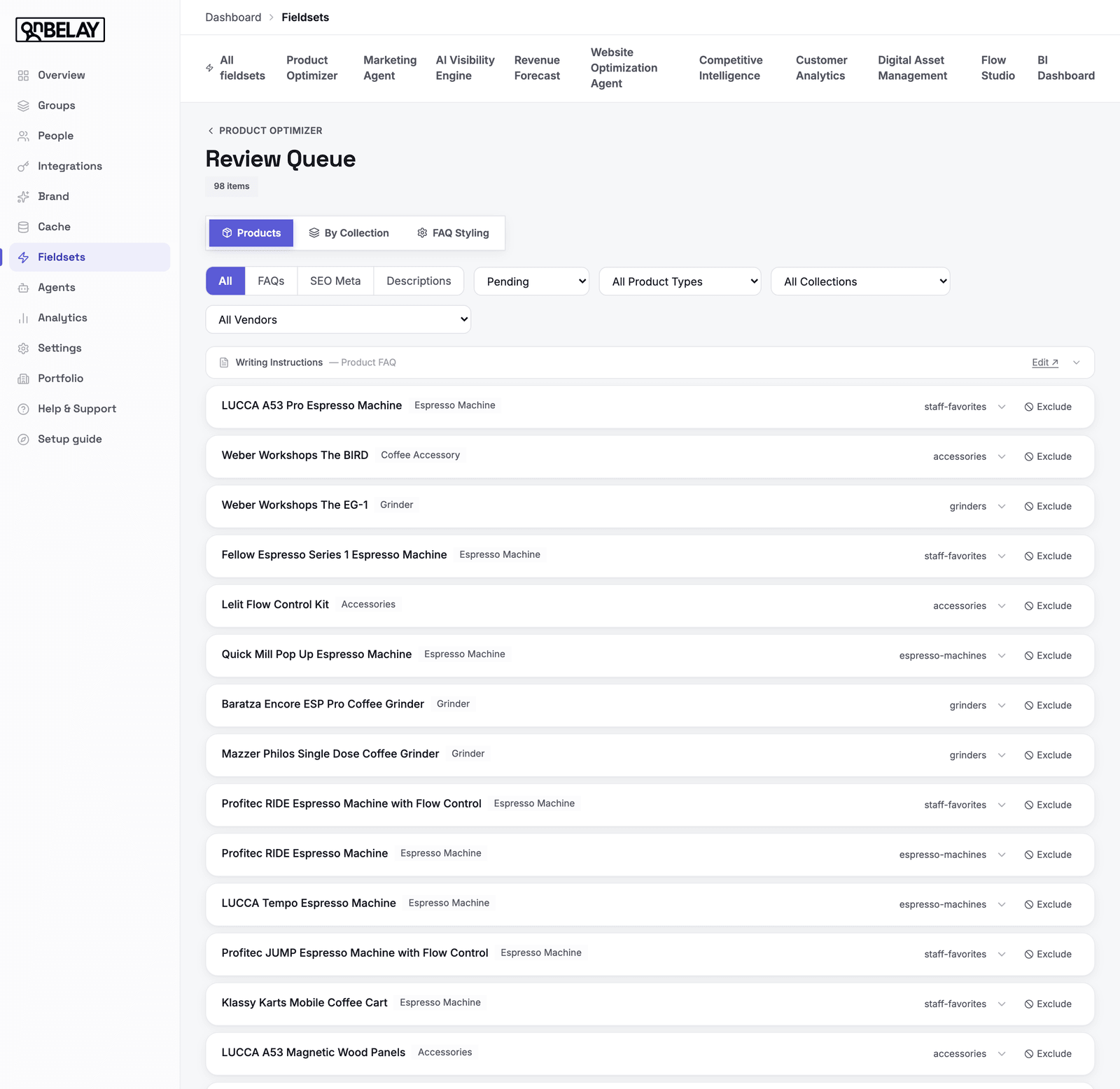
Context loaded: Merchandising · Clive Coffee. Shopify catalog (412 SKUs), brand voice, taxonomy, pricing strategy, and Klaviyo + Google Search Console access loaded. Write access to Shopify is gated by approval.
You
Pull the 25 products with the weakest descriptions. Draft on-brand rewrites with SEO meta — queue everything for approval.
Claude
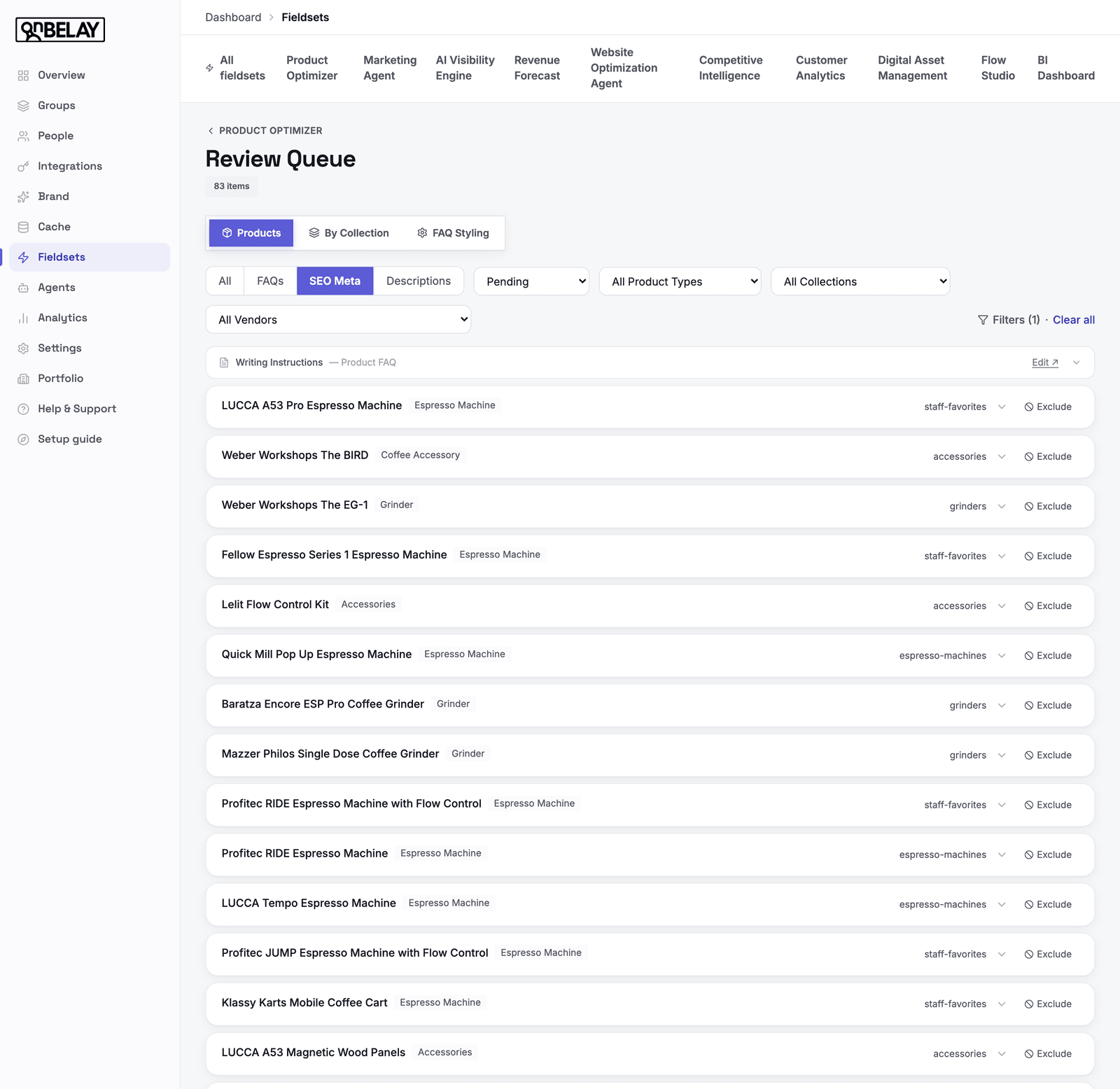
Scanning catalog… 25 candidates identified by length, schema coverage, and click-through rate from Search Console. Drafted: full HTML descriptions, optimized titles, and meta descriptions for each — all in Clive's tone. 25 items queued in the Product Optimizer approval feed. Nothing is published yet.
Merchandising teams are drowning in catalog work.
The catalog never stops growing. The team rarely does.
Thousands of SKUs. Inconsistent descriptions.
Half the catalog reads like it was written by a different brand. SEO meta is missing on a third of products. Nobody has the bandwidth to fix it manually.
Generic AI tools don't know your category.
Out-of-the-box AI writes copy that sounds like Amazon. It doesn't know your brand voice, your customer, or what makes your products different.
You can't trust AI with write access to your store.
One bad prompt could push broken copy live to thousands of products. Without approval gates, AI in your catalog is a liability.
CAPABILITIES
What your merchandising team can do.
Catalog-scale work. Brand-voice consistent. Approval-gated by default.
Bulk product description rewrites
Generate brand-voice product descriptions across hundreds of SKUs. Reviewed in a queue. Published only on approval.
SEO meta and title generation
Pull from Search Console to identify weak ranking pages. Draft new titles and meta descriptions optimized for the right keywords.
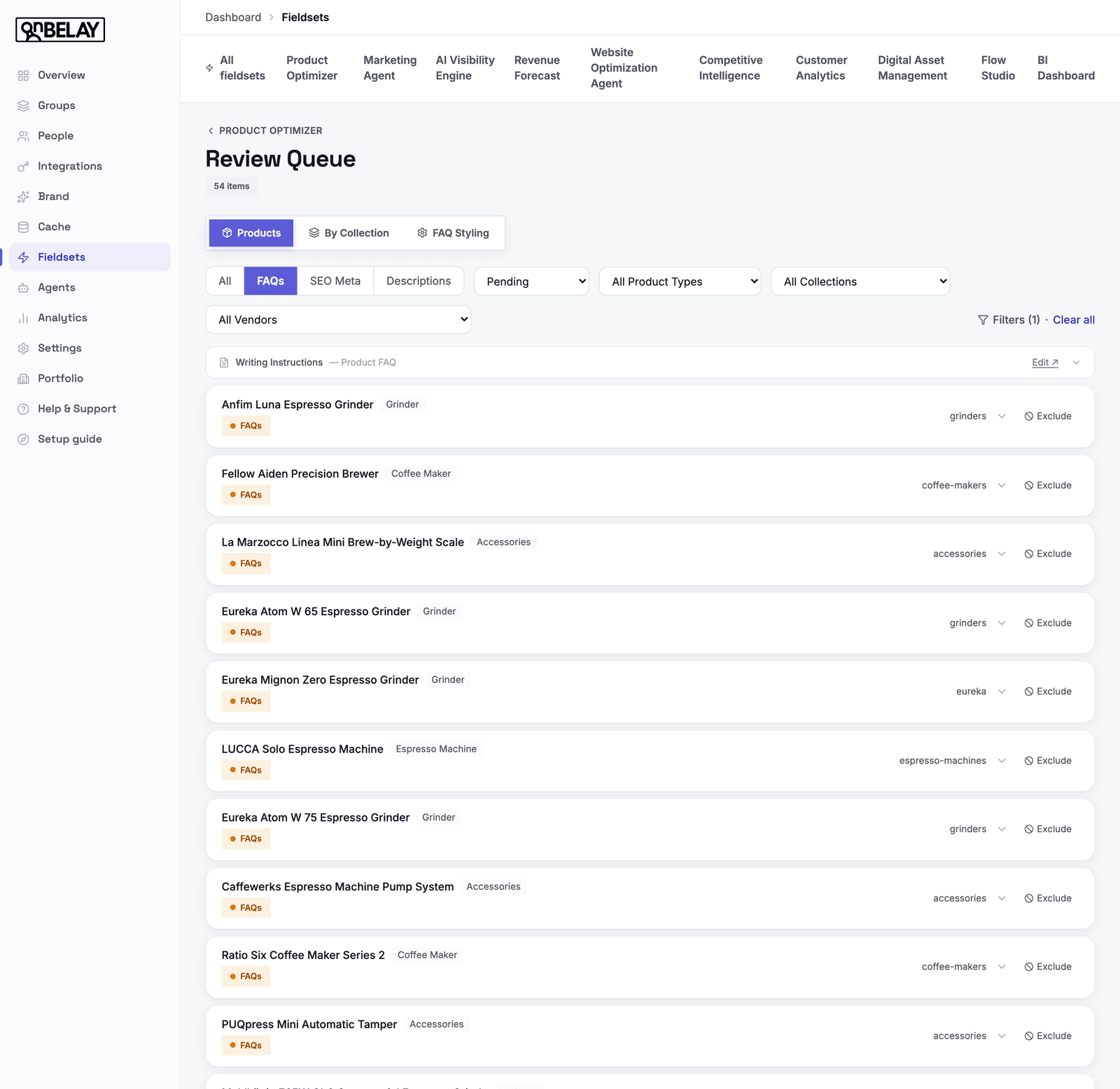
FAQ pairs per product
Generate 5–8 customer-quality Q&A pairs for each product — pulled from real support tickets and reviews where possible.
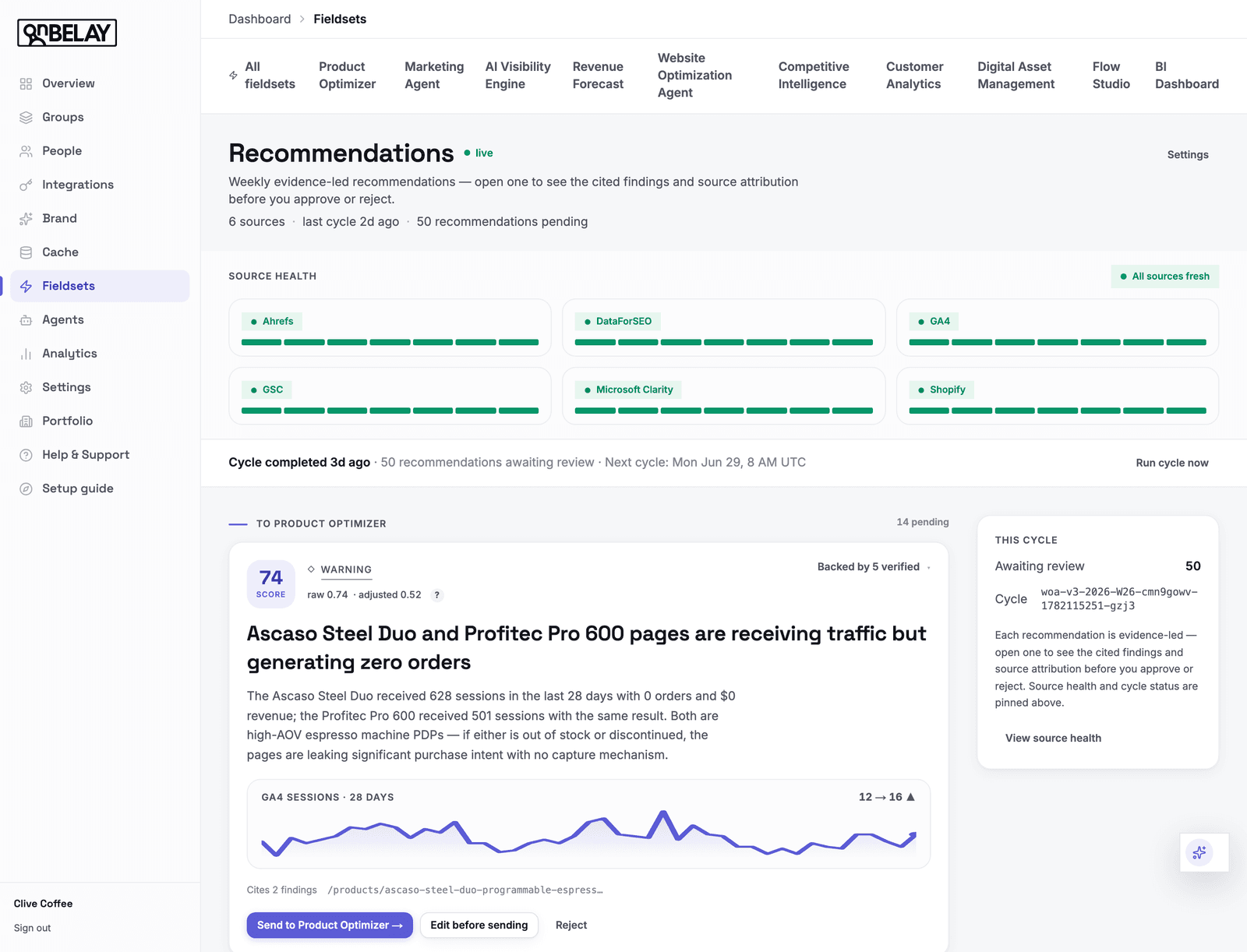
Catalog audits and gap analysis
Identify products missing images, attributes, schema markup, or category tags. Surface the catalog hygiene work that nobody sees.
Cross-sell and collection curation
Suggest collection groupings, cross-sell pairs, and merchandising stories grounded in actual order data from Shopify.
Seasonal collection refreshes
Reframe existing catalog copy for seasonal campaigns without rewriting from scratch.
Competitive copy review
Pull competitor product pages, surface positioning gaps, and recommend tonal shifts to differentiate.
Catalog reconciliation against ERP
Compare Shopify catalog against NetSuite or Acumatica. Flag pricing, SKU, or inventory mismatches before they break the storefront.
Prompts that actually work.
Because the context is already there.
"Pull the 50 lowest-converting product pages from Shopify. Identify which ones have weak titles or thin descriptions. Queue rewrites."
"Generate 5 FAQ pairs per product for our top 100 SKUs. Use Intercom ticket history for grounding. Queue all for review."
"Find every product missing meta description or schema markup. Draft and queue the missing fields."
"Build a Spring Refresh collection — 30 products, drafted collection copy and reorder suggestions."
Connected integrations
 Shopify read+write (gated)
Guardrails built for live commerce.
Your storefront is not a place to learn from AI mistakes.
Nothing publishes without approval
Every product, collection, blog post, and meta change lands in an approval queue. Bulk approve, edit, or reject — nothing goes live to your storefront until a human says yes.
Brand voice holds across every session
Brand voice is enforced at the group level. Individual prompts cannot override the tone your customers expect.
No off-catalog writes
Claude only writes to product fields scoped for the merchandising group. Pricing, inventory, and order data stay read-only unless explicitly elevated.